Sustainable Development, Grassroots Innovation, and Social Equity.
Program & Methodology
"To be the premier catalyst for a thriving, inclusive, and carbon-neutral South Africa, where marginalised communities lead the global shift toward sustainability through homegrown innovation, social equity, and economic resilience."
"To champion a just and inclusive green transition by empowering grassroots entrepreneurs to build sustainable, profitable ventures that solve environmental challenges while driving social equity within South Africa’s marginalised communities."

To address these challenges, GNBI has established four primary pillars of action:
Strategic Imperatives on climate change.
Powering a Sustainable Future, One Startup at a Time.
We support startups and community enterprises developing and deploying clean energy solutions. From solar photovoltaic and micro-grid technology to energy efficiency systems, our programme helps you commercialize innovations that bring affordable, reliable, and sustainable power to communities and the wider market.
• Focus Areas: Renewable Energy Production, Energy Efficiency, cooking systems, Clean Air, Green Technology Commercialization, Off-grid Solutions.
• Who Should Apply: Tech developers, engineers, community cooperatives, and innovators with scalable clean energy solutions.
Cultivating Resilience for Smallholder Farmers and Rural Communities.
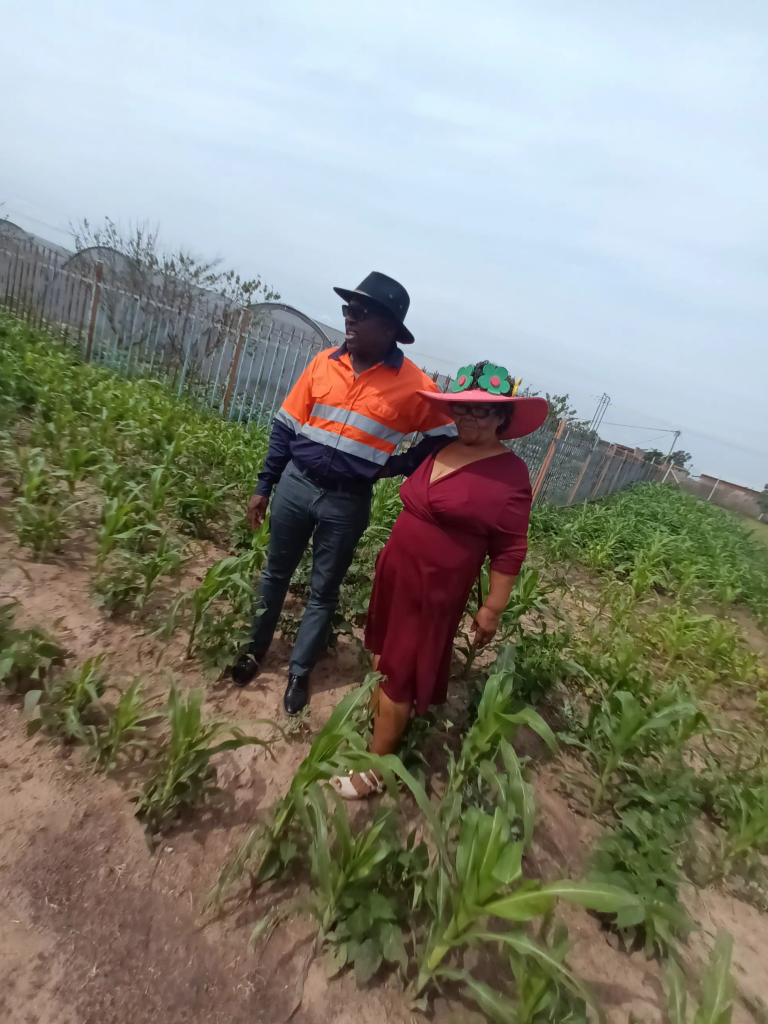
Facing the challenges of climate change, our CSA programme fosters innovation in Agri tech and Agro- processing. We guide smallholder farmers and rural-focused startups to implement solutions that increase productivity, build climate resilience, and promote sustainable land and water management.
• Focus Areas: Precision Farming (Agri tech), Drought-Resistant Crops, Water-Efficient Irrigation, Sustainable Agro-Processing, Value-Addition in Rural Supply Chains.
• Who Should Apply: Farmers, Agri tech entrepreneurs, food processors, and community groups seeking to modernize and sustain agricultural practices.
Transforming Waste into Wealth and Opportunities.
The circular economy is essential for resource efficiency. This programme is designed for communities and startups that are pioneering solutions in waste management, recycling, and upcycling. We help you design closed-loop systems that minimize landfill waste and create new, high-value products and sustainable jobs.
• Focus Areas: Advanced Recycling Techniques, Waste-to-Energy, Upcycling and Repurposing Materials, Eco-Design, Community-Based Waste Collection and Processing.
• Who Should Apply: Innovators focused on waste reduction, material scientists, designers, and
community-based recycling enterprises.
Innovating for Water Security and Ecosystem Health.
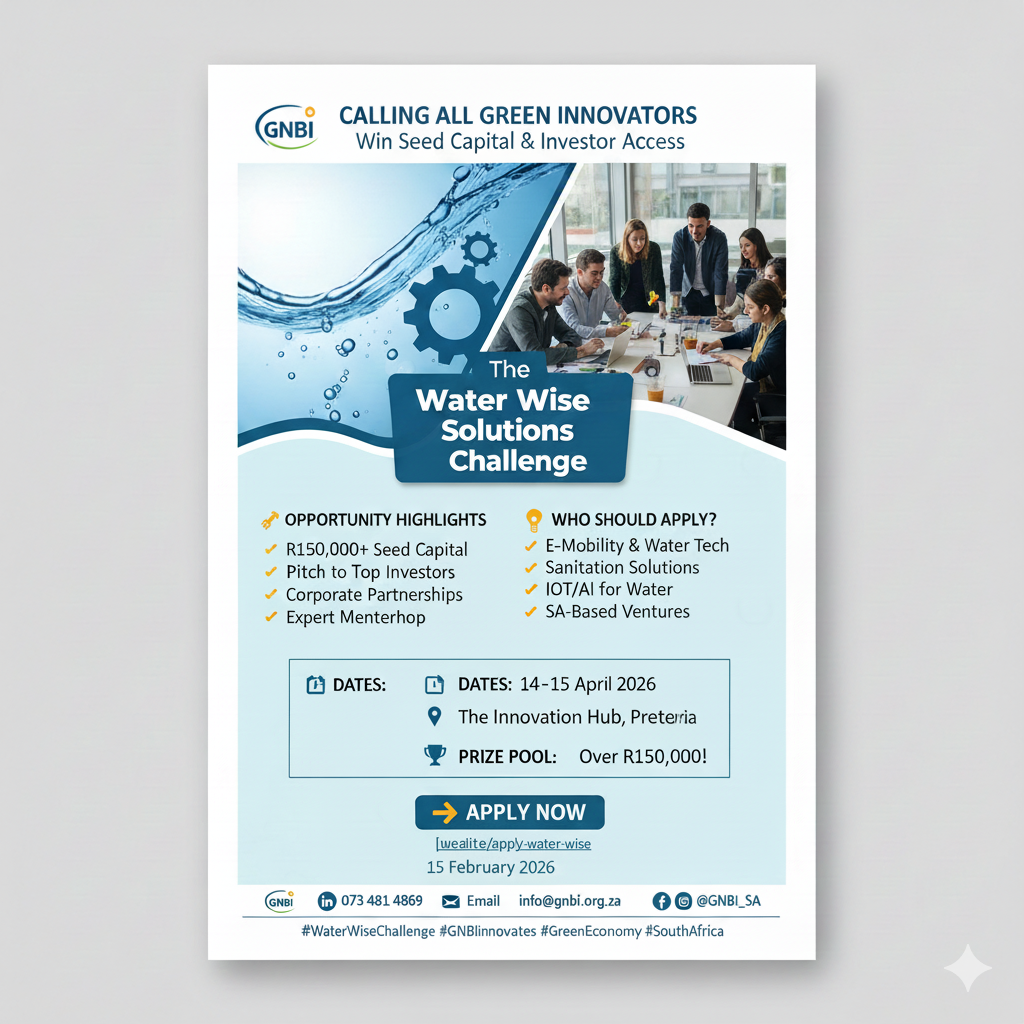
Water scarcity and resource degradation pose a critical threat. We incubate businesses and SMMES that deliver innovative solutions for water conservation, quality improvement, and the sustainable management of natural ecosystems. Our focus is on practical, locally relevant technologies and services.
• Focus Areas: Water Harvesting and Treatment, Leak Detection and Smart Water Management, Land Rehabilitation, Alien Invasive Species Management, and Biodiversity Conservation.
• Who Should Apply: Environmental consultants, water technology developers, local community
initiatives, women and youth graduates, and SMMES providing ecological services.
Building the Workforce for the Green Economy.
Our technical skills training component is integrated across all sectors, ensuring a steady pipeline of skilled individuals to support the incubated businesses and the wider green economy. We provide hands-on, accredited training that translates directly into employment and entrepreneurial opportunities.
• Focus Areas: Installation and Maintenance of Renewable Energy Systems (e.g., Solar PV), Water Quality Testing, Advanced Recycling Equipment Operation, Sustainable Farming Techniques.
• Outcome: Graduates are equipped with the technical competence needed for high-demand green
jobs, or the ability to start their own technical services businesses.
Education, Awareness, and Gender-Transformative Change.
Addressing the climate crisis requires more than just technology; it demands profound social and behavioural change, especially within communities most vulnerable to environmental shocks. At GNBI, we embrace a gender-transformative approach to ensure our climate action is both effective and equitable. Our programme focuses on:
• Gender-Responsive Education: We acknowledge that climate change impacts women, girls, and other disadvantaged groups disproportionately. Our educational content is designed to address these specific vulnerabilities and build resilience.
• Empowering Disadvantaged Groups: We empower women and youth as active agents and leaders of climate action, developing their capacity for advocacy, disaster preparedness, and the implementation of local adaptation and mitigation strategies.
• Behavior Change Communication (BCC): We utilize culturally sensitive and inclusive communication strategies to raise awareness, shift harmful practices, and promote the adoption of sustainable behaviors.
• Knowledge Integration: We facilitate the blending of scientific data with valuable indigenous and
local knowledge, often held by women and community elders, to create more effective and
sustainable solutions.
Program Initiatives & Solutions
GNBI implements specific interventions to turn challenges into opportunities:
GNBI Strategic Initiative
Measurement of Success (KPIs)
GNBI tracks progress through a rigorous set of Impact Metrics:
• Net-Zero Growth: Number of enterprises adopting low-carbon operations.
• Livelihood Creation: Number of green jobs generated for local youth and women.
• Food Security: Number of households food secure.
• Waste Diversion: Total tonnage of waste diverted from local landfills.
• Capital Mobilized: Total Rand value of green investment secured by incubated SMEs.